
What is the Subnautica 2 Survival Game?
Overview, Summary and Rating of Subnautica 2

Subnautica 2 - A Deep Dive Into the Future of Underwater Survival Gaming!
Where Every Sound Could Be Your Last
The upcoming game Subnautica 2 is already considered one of the most anticipated survival titles in modern gaming. Developed by Unknown Worlds Entertainment, the game aims to expand the revolutionary ideas introduced in the original Subnautica while introducing entirely new technological and gameplay systems. Unlike many conventional survival games, the Subnautica series focuses less on combat and more on exploration, environmental immersion, psychological tension, and scientific world-building. This unique combination helped the first game become a milestone within the survival genre and established a passionate global fan community.
One of the reasons why Subnautica became so successful was its extraordinary atmosphere. The game transformed the ocean into an emotional experience. Players were not portrayed as powerful heroes but as vulnerable survivors trapped within a dangerous alien ecosystem. The underwater world felt alive, mysterious, and unpredictable. Every descent into deeper waters created tension because players never truly knew what might emerge from the darkness. This fear was not generated through scripted horror scenes, but through environmental design, sound engineering, and the fear of the unknown. Subnautica 2 appears determined to intensify these elements on a much larger scale.
The sequel is expected to introduce a completely new alien planet filled with diverse underwater ecosystems, bioluminescent environments, massive cave systems, volcanic trenches, and unknown lifeforms. Environmental storytelling will likely remain one of the central pillars of the experience. Instead of overwhelming players with direct exposition, the game may once again allow players to discover history through exploration, abandoned research stations, alien ruins, environmental clues, and fragmented data logs. This design philosophy creates a stronger emotional connection because players uncover the narrative themselves rather than simply watching it unfold passively.
A particularly important aspect of Subnautica 2 is the evolution of ecological simulation. The original game already impressed players with believable ecosystems in which predators hunted prey and species occupied specific environmental niches. However, the sequel could significantly expand these mechanics through advanced artificial intelligence systems. Creatures may develop migration patterns, territorial behavior, adaptive hunting techniques, and more dynamic interactions with both the player and the environment. Such systems would make the world feel less like a static game map and more like a functioning alien ecosystem operating independently of player actions.
The technological improvements expected in Subnautica 2 are equally significant. Modern hardware enables far more realistic underwater rendering than was possible during the development of the original title. Advanced lighting systems, volumetric fog, real-time caustics, improved particle simulation, and highly detailed water physics could dramatically enhance immersion. Underwater environments are particularly difficult to render convincingly because light behaves differently beneath the surface. Water absorbs colors, distorts visibility, and creates constantly shifting reflections and shadows. If implemented successfully, these technologies could make Subnautica 2 one of the most visually immersive survival games ever created.
Another revolutionary feature is the addition of cooperative multiplayer gameplay. This changes the entire structure of the Subnautica experience. The first game focused heavily on loneliness and isolation, which contributed significantly to its psychological impact. Multiplayer introduces new dynamics such as teamwork, cooperative exploration, shared resource management, and collaborative base construction. Players may work together to pilot large submarines, establish underwater research stations, or survive dangerous deep-sea expeditions. However, this also creates a major design challenge for the developers: preserving the emotional tension and vulnerability that defined the original experience while allowing players to cooperate.
The underwater environment itself remains one of the game’s most powerful storytelling tools. Oceans naturally trigger psychological reactions in humans because they represent both mystery and danger. Darkness, pressure, limited visibility, and unfamiliar sounds generate anxiety in ways that many traditional horror games fail to achieve. The Subnautica franchise understands this psychological effect exceptionally well. The fear in these games is often subtle and atmospheric rather than aggressive. A distant roar in the deep ocean or the sudden disappearance of visible light can create more tension than direct combat encounters. Subnautica 2 will likely continue using environmental horror as a core component of player immersion.
Base-building mechanics are also expected to become significantly more sophisticated. In the original game, underwater habitats served as safe zones where players could manage resources, grow food, and expand their technological capabilities. The sequel may introduce more advanced engineering systems, including structural integrity simulation, improved power management, automated production systems, pressure-resistant architecture, and large-scale modular construction. These mechanics could deepen the survival aspect while simultaneously giving players greater creative freedom in designing underwater colonies.
Vehicles will almost certainly play an expanded role as well. In the original game, iconic machines such as the Seamoth and Cyclops became essential tools for exploration and survival. Each vehicle altered the player’s relationship with the ocean by extending exploration range and enabling access to increasingly dangerous environments. Subnautica 2 may introduce customizable submarines, cooperative exploration vessels, autonomous drones, and advanced deep-sea research technology. These additions could dramatically expand gameplay possibilities while reinforcing the feeling of scientific exploration.
One of the most fascinating aspects of the Subnautica franchise is its connection to real-world marine science. Many of the creatures and ecosystems are inspired by actual deep-sea biology, hydrothermal vent ecosystems, bioluminescent organisms, and oceanographic phenomena. This scientific inspiration helps the game feel believable despite its alien setting. In many ways, Subnautica encourages curiosity about real marine ecosystems and environmental science. The sequel may continue this tradition by integrating even more realistic ecological and biological concepts into its world design.
The survival genre itself could be significantly influenced by the success of Subnautica 2. Many survival games eventually become repetitive cycles of gathering materials and crafting equipment. Subnautica distinguished itself because exploration and discovery remained emotionally meaningful throughout the experience. The world itself became the primary reward. If the sequel successfully expands this philosophy through advanced ecosystem simulation, deeper multiplayer systems, and more immersive environmental storytelling, it could once again redefine expectations for survival games across the industry.
Nevertheless, the development of such an ambitious project comes with enormous technical and creative challenges. Simulating believable underwater ecosystems while maintaining stable multiplayer performance requires extremely advanced optimization. Water physics, AI behavior, large-scale environmental rendering, and dynamic creature interactions all place substantial demands on hardware and software systems. In addition, the developers must carefully preserve the unique identity of the franchise. Excessive focus on action gameplay or chaotic multiplayer mechanics could weaken the atmosphere of vulnerability and isolation that made the original game so memorable.
Despite these challenges, excitement surrounding Subnautica 2 continues to grow rapidly. Players around the world are eager to return to the depths of an alien ocean and experience new forms of exploration, fear, and discovery. The original Subnautica succeeded because it created emotional memories rather than simple gameplay moments. Players still remember their first descent into deep waters, their first encounter with massive leviathans, and the overwhelming silence of the abyss. These moments transformed the game into something far more powerful than a standard survival experience.
Ultimately, Subnautica 2 represents far more than just another sequel. It symbolizes the continuing evolution of immersive game design. By combining scientific inspiration, environmental storytelling, advanced technology, psychological atmosphere, and cooperative survival mechanics, the game has the potential to become one of the defining interactive experiences of the modern gaming era. In an industry often dominated by fast-paced action and constant stimulation, Subnautica 2 stands apart by embracing exploration, mystery, silence, and the terrifying beauty of the unknown depths beneath an alien sea.
The Legacy of the Original Subnautica
Before understanding the significance of Subnautica 2, it is important to examine the cultural and mechanical impact of its predecessor. Released in 2018, Subnautica distinguished itself from other survival games through several revolutionary design decisions:
- A fully underwater open world
- Non-linear environmental storytelling
- Minimal handholding
- A scientifically inspired ecosystem
- Atmospheric horror without traditional combat
- Deep psychological immersion
Unlike games that relied on aggression and violence, Subnautica focused on vulnerability. Players were not dominant conquerors of the world; they were fragile explorers surviving in an environment that felt indifferent, mysterious, and alive. The game’s greatest achievement was arguably its atmosphere. Darkness, pressure, unknown sounds, and deep-ocean isolation generated tension far more effectively than scripted horror sequences. This created a uniquely emotional survival experience rarely replicated elsewhere in gaming. Its successor now attempts to expand these principles into something vastly larger and more technologically sophisticated.
What Is Subnautica 2?
Subnautica 2 is an upcoming open-world survival exploration game developed by Unknown Worlds Entertainment. The title aims to expand the core mechanics of the original game while introducing:
- Cooperative multiplayer gameplay
- A completely new alien world
- Enhanced AI ecosystems
- Larger procedural systems
- More advanced base construction
- Expanded vehicle systems
- Stronger narrative integration
- Next-generation graphics and physics
Importantly, the developers have clarified that this is not simply “Subnautica Below Zero 2.” Instead, it is intended as a major evolution of the franchise’s foundational ideas. The game is expected to maintain the core identity of exploration-driven survival while introducing systems that significantly deepen player interaction with the environment and with other players.
A New Planet: Environmental Design and World-Building
The Importance of Alien Ecology
One of the defining strengths of the Subnautica franchise has always been its believable alien biology.
Unlike many science-fiction games where alien creatures are simply monsters with different skins, Subnautica designs ecosystems according to ecological logic:
- Predators hunt prey
- Creatures occupy territorial niches
- Flora adapts to environmental conditions
- Species demonstrate behavioral patterns
- Biomes possess interconnected food chains
This scientific consistency creates immersion because the world feels alive independently of the player.
Subnautica 2 appears poised to dramatically expand this concept.
Larger and More Dynamic Biomes
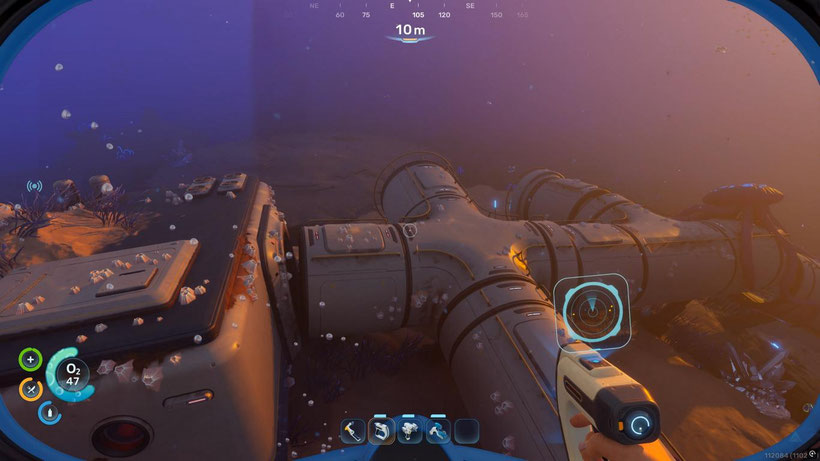
Early information suggests the sequel will feature significantly larger biomes with increased verticality and environmental diversity. Potential biome types may include:
- Frozen abyssal trenches
- Hydrothermal volcanic zones
- Bioluminescent forests
- Organic coral megastructures
- Deep pressure caverns
- Toxic chemical seas
- Floating underwater ecosystems
A major focus appears to be environmental transition. Instead of isolated “zones,” ecosystems may gradually blend into one another, creating more natural exploration flows. This would represent a major advancement over many open-world survival games that often separate environments too rigidly.
The Evolution of Fear in Underwater Gaming
Psychological Horror Through Environment
One of the most remarkable achievements of the original Subnautica was how effectively it created fear without relying heavily on scripted horror. The fear emerged naturally from:
- Darkness
- Limited visibility
- Unknown creatures
- Sound design
- Deep-water isolation
- Resource scarcity
- Navigational uncertainty
Players frequently describe experiences where simply hearing distant creature noises generated intense anxiety.
Subnautica 2 is expected to elevate this environmental horror through improved rendering technologies, advanced AI behavior, and more dynamic audio systems.
Sound Design as a Gameplay Mechanic
In underwater environments, sound becomes crucial for survival. Future iterations may include:
- Directional acoustic tracking
- Dynamic echo simulation
- Creature communication systems
- Sonar interference
- Environmental pressure acoustics
If implemented successfully, sound itself could become an interactive survival mechanic rather than merely atmospheric decoration. This would place Subnautica 2 among the most immersive audio-driven games in the industry.
Subnautica 2 Multiplayer: The Biggest Transformation
Why Multiplayer Changes Everything
Perhaps the most significant addition to Subnautica 2 is cooperative multiplayer. This single feature fundamentally transforms the philosophical structure of the game. The original Subnautica focused heavily on loneliness and isolation. Multiplayer introduces entirely new gameplay dynamics:
- Cooperative exploration
- Shared resource management
- Team-based survival strategies
- Specialized player roles
- Collaborative base construction
- Social storytelling
However, multiplayer also introduces major design challenges.
Balancing Isolation and Cooperation
The developers face a critical problem: How can Subnautica 2 maintain the emotional isolation that defined the original game while supporting cooperative gameplay? Potential solutions may include:
- Massive environmental scale
- Communication limitations underwater
- Dangerous biome separation
- Dynamic weather and pressure systems
- Creature migration events
- Psychological survival mechanics
The ideal design would allow players to feel small and vulnerable even when working together. Achieving this balance could redefine multiplayer survival design across the industry.
Subnautica 2 Technological Advancements
Next-Generation Rendering
Modern game engines now allow underwater rendering at a level previously impossible. Potential technologies expected in Subnautica 2 include:
- Volumetric lighting
- Real-time caustics
- Advanced water physics
- Dynamic sediment systems
- Bioluminescent particle simulation
- Improved vegetation movement
- Physically based material rendering
Water is one of the most difficult substances to simulate convincingly in real time. Accurate underwater rendering requires complex calculations involving:
- Light absorption
- Color scattering
- Density distortion
- Refraction
- Visibility attenuation
If Subnautica 2 fully utilizes modern hardware capabilities, it could become one of the visually most immersive aquatic environments ever created in gaming.
Artificial Intelligence and Living Ecosystems
From Static Creatures to Simulated Life
The original Subnautica already featured creatures with impressive behavioral systems. However, future AI advancements may allow for dramatically more complex ecosystems. Possible innovations include:
- Dynamic migration patterns
- Territory conflicts
- Adaptive hunting behavior
- Ecosystem disruption
- Creature memory systems
- Pack intelligence
- Environmental adaptation
Imagine a world where removing too many predators causes prey overpopulation, which subsequently destroys local vegetation and alters entire ecosystems. Such systems would transform survival from simple resource gathering into ecological interaction.
Narrative Design and Environmental Storytelling
Minimalism as Strength
Traditional games often overwhelm players with exposition and dialogue. Subnautica succeeded because it embraced narrative restraint. The environment itself told the story. Abandoned structures, mysterious ruins, extinct species, and fragmented data logs created a feeling of archaeological discovery. Players uncovered history rather than being directly told everything. This approach generated stronger emotional engagement because discovery felt personal.
Potential Narrative Themes in Subnautica 2
The sequel may explore deeper philosophical and scientific themes such as:
- Ecological collapse
- Human colonization ethics
- Artificial intelligence
- Evolutionary adaptation
- Deep-sea biology
- Corporate exploitation
- Isolation psychology
- Survival morality
Science fiction becomes most effective when it reflects real-world anxieties. In an era of climate change, biodiversity loss, and ecological instability, underwater survival narratives feel increasingly relevant.
Subnautica 2 Base Building and Underwater Architecture
Functional Engineering Beneath the Ocean
Base construction is expected to become significantly more sophisticated. Possible new systems include:
- Structural integrity simulation
- Pressure-resistant architecture
- Power-grid management
- Automated resource processing
- Scientific laboratories
- Defensive environmental systems
- Multi-level modular habitats
The underwater setting creates architectural challenges unique to the franchise:
- Pressure resistance
- Oxygen distribution
- Energy management
- Hull stability
- Environmental sealing
These mechanics could evolve the game into a sophisticated engineering simulator while remaining accessible to casual players.
Subnautica 2 Vehicles and Exploration Technology
Expanding Underwater Mobility
Vehicles have always played a crucial role in Subnautica. The original game featured iconic creations such as:
- Seamoth
- Cyclops
- Prawn Suit
Each vehicle represented a different relationship between player and environment. Subnautica 2 may dramatically expand vehicular gameplay through:
- Multiplayer submarines
- Modular vehicle customization
- Deep-pressure exploration systems
- Autonomous drones
- Mobile research stations
- AI-assisted navigation
Large-scale cooperative submarines alone could become transformative gameplay systems, combining engineering, navigation, teamwork, and survival into a unified experience.
Scientific Inspiration and Real-World Oceanography
Why Subnautica Feels Believable
The franchise draws heavily from actual marine science. Real-world inspirations include:
- Deep-sea ecosystems
- Hydrothermal vent biology
- Bioluminescence
- Marine predator behavior
- Coral reef systems
- Ocean pressure mechanics
This scientific grounding creates authenticity rarely found in science-fiction games. Interestingly, many marine biologists and oceanographers have praised the original game for inspiring curiosity about real-world ocean science. If Subnautica 2 continues this approach, it may once again blur the boundary between entertainment and educational inspiration.
The Future of Survival Games
Beyond Resource Grinding
Many survival games eventually become repetitive loops:
- Gather resources
- Build structures
- Craft equipment
- Repeat
Subnautica distinguished itself by making exploration emotionally meaningful. The world itself was the reward.
Subnautica 2 has the potential to push survival gaming even further by emphasizing:
- Ecological interaction
- Narrative discovery
- Cooperative immersion
- Environmental simulation
- Scientific exploration
- Psychological atmosphere
If successful, the game may influence an entire new generation of survival titles.
Challenges Facing the Developers
Despite enormous excitement, Subnautica 2 also faces substantial risks.
Creating believable underwater environments at large scale is extremely demanding.
Potential difficulties include:
- Multiplayer synchronization underwater
- AI ecosystem simulation
- Performance optimization
- Water rendering complexity
- Physics calculations
- Procedural world generation
Design Challenges
The developers must also preserve the identity of the original game. Too much focus on action or multiplayer chaos could undermine the atmosphere that made Subnautica unique. The key challenge is evolution without losing identity.
Community Expectations and Cultural Impact
One of the Most Anticipated Survival Games
The original Subnautica developed a passionate global community because it delivered something emotionally distinct. Players remember moments such as:
- First deep-ocean descent
- Encountering massive leviathans
- Discovering alien ruins
- Exploring abandoned facilities
- Hearing unknown sounds in darkness
These experiences created emotional memories rather than simple gameplay achievements. Expectations for the sequel are therefore exceptionally high.
Conclusion: Why Subnautica 2 Could Redefine Immersive Gaming
Subnautica 2 is more than another survival sequel. It represents a potential milestone in immersive game design.
Its importance lies not merely in graphics or technology, but in its commitment to environmental immersion, emotional atmosphere, ecological simulation, and exploratory storytelling. At its best, the Subnautica franchise transforms the ocean into a character itself: beautiful, mysterious, indifferent, terrifying, and alive. If the sequel successfully combines:
- advanced ecosystem simulation,
- next-generation underwater rendering,
- cooperative exploration,
- scientific authenticity,
- and atmospheric storytelling,
then Subnautica 2 may become one of the defining interactive experiences of modern gaming. In an industry increasingly focused on speed, monetization, and constant stimulation, Subnautica 2 stands apart by embracing something far rarer: the power of wonder, silence, fear, and discovery beneath an endless alien sea.

- 5.0 Atmosphere
- 3.5 Gameplay
- 4.0 Graphics
- 4.8 Survival Elements
- 2.7 Replay Value
➜ Check out daily Amazon deals in the gaming and accessories category
➜ Check out daily deals from Apple
*Amazon ad link
We cannot guarantee the accuracy, completeness, or timeliness of the information. All rights reserved. The articles and pages may contain affiliate links. These serve both to provide furtherinformation and to finance our website. I am a participant in the Amazon Associates Program, which allows websites to earn advertising revenue by placing ads and links to Amazon. As an AmazonAssociate, I earn fromqualifying purchases.